









University of Exeter Press
Finding Birt Acres
The Rediscovery of a Film Pioneer
Couldn't load pickup availability
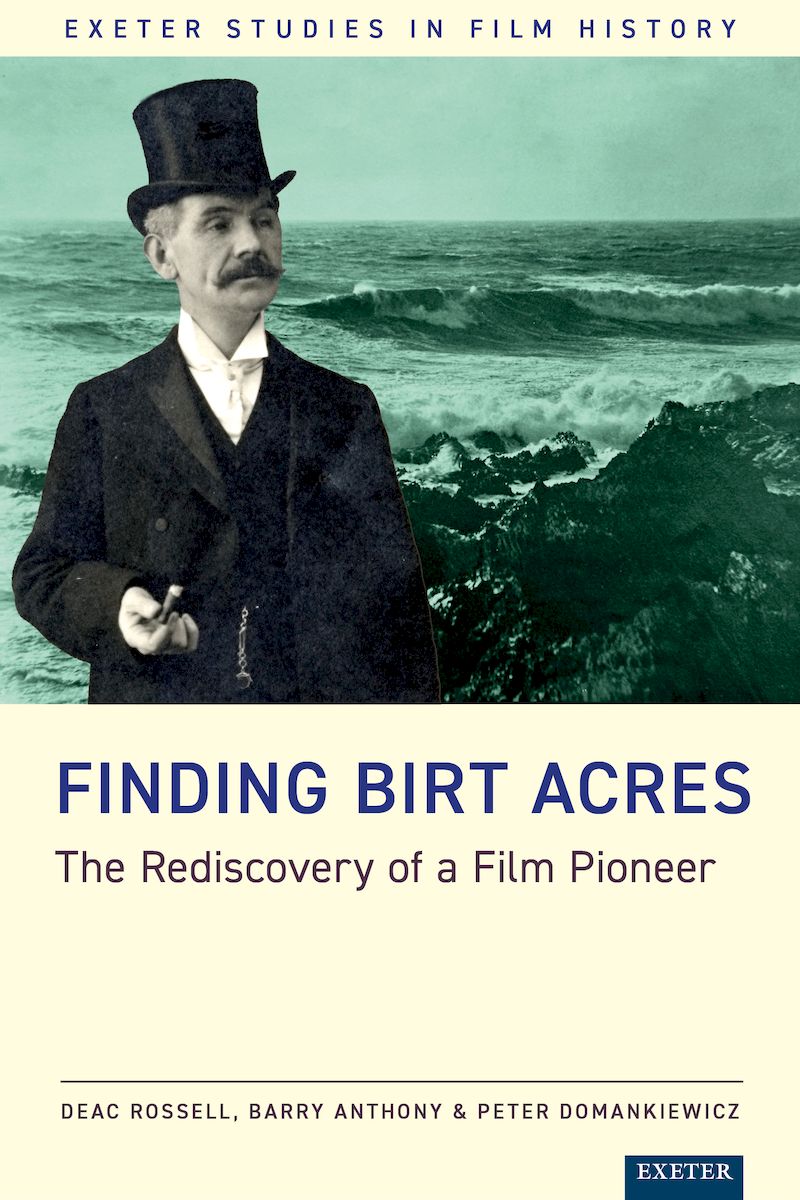
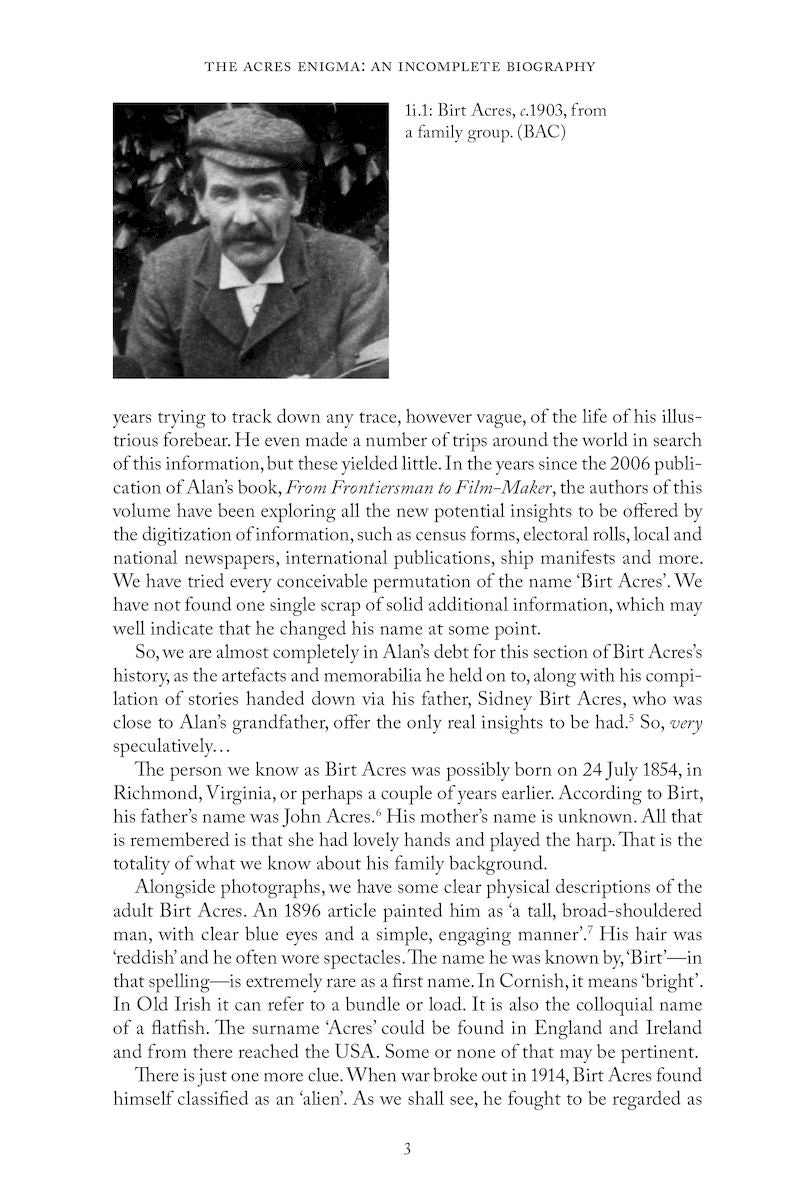
Apparently from Virginia, Birt Acres appeared out of nowhere in Britain aged 35, without a trace of his former life. Yet immediately he became a prominent figure in the late Victorian photographic world. He soon teamed up with Robert Paul to make a moving picture camera and then shot the first commercial films in Britain in spring 1895, in parallel with the work of the Lumière brothers in France, before repeating this in Germany. His innovations included being the first to establish a dedicated venue for watching films, to give a Royal Command Performance of moving pictures, to create screen advertising, and to design a home movie camera.
A disdain for showbusiness led to Acres squandering the commercial opportunities he created, and initiated the erasure of his remarkable story. From early in the twentieth century, film historians have consistently underestimated and undervalued his achievements.
In this book, for the first time, we see a detailed and compelling portrait of Birt Acres, with substantial new research on his early work in moving pictures and on the careers of his associates, leading directly to new interpretations of the importance of this elusive pioneer. It draws on a wealth of fresh sources, with a massively expanded filmography supporting this re-evaluation. Written by three specialists in early film history, this volume significantly revises the received story of Birt Acres, at the same time casting new light on the beginnings of cinema in Britain.
This is unquestionably a significant and original contribution to the field of early film studies.
Luke McKernan, formerly Lead Curator, News and Moving Image, the British Library
Finding Birt Acres stands alongside Martin Sopocy and Ian Christie’s monographs on James Williamson and Robert Paul as the tangible proof that an authoritative study on early cinema can also be a page-turner: a perfect marriage of scholarship and empathy, blissfully immune from hagiography.
Paolo Cherchi Usai, Senior Curator-at-large, George Eastman Museum
With a lively and authoritative text this book reappraises Birt Acres’ place in the history of cinematography and returns him to centre stage. The authors recast the troubled relationship with R W Paul, present a comprehensive filmography, and highlight the broader tensions that affected the nascent film industry. It should be on every film historian’s bookshelf.
Dr Michael Pritchard, photographic historian and researcher
An exemplary and very fine, almost police investigation into one of the most important film pioneers, Birt Acres, about whom little was known until now. This exciting work renews our vision of the very moving period of the early days of English cinema.
Laurent Mannoni, Scientific Director of the Heritage of the Cinémathèque Française
One of the book’s pleasures is to be found in its prolific illustrations... Above all, though, it is the astonishing quality of the research and the prose in which it is recorded that is the book’s great strength in the way in which it achieves the daunting process in which the long-forgotten Acres is restored to memory.
Brian McFarlane
Film & History
This comprehensive monograph on Birt Acres' inventions and commercial activities in the early years of cinematography, based entirely on primary sources, sheds light on the fierce competition during the development of this new medium and finally makes sound corrections to authorship claims that have been asserted for over a century.
Martin Loiperdinger
H-Soz-Kult
This is very much a "warts-and-all" and very readable history of Birt Acres... the book puts Acres back where he belongs as a genuine pioneer of projected film with a significant number of world's firsts to his credit.
Bryony Dixon
The Journal of Film Preservation
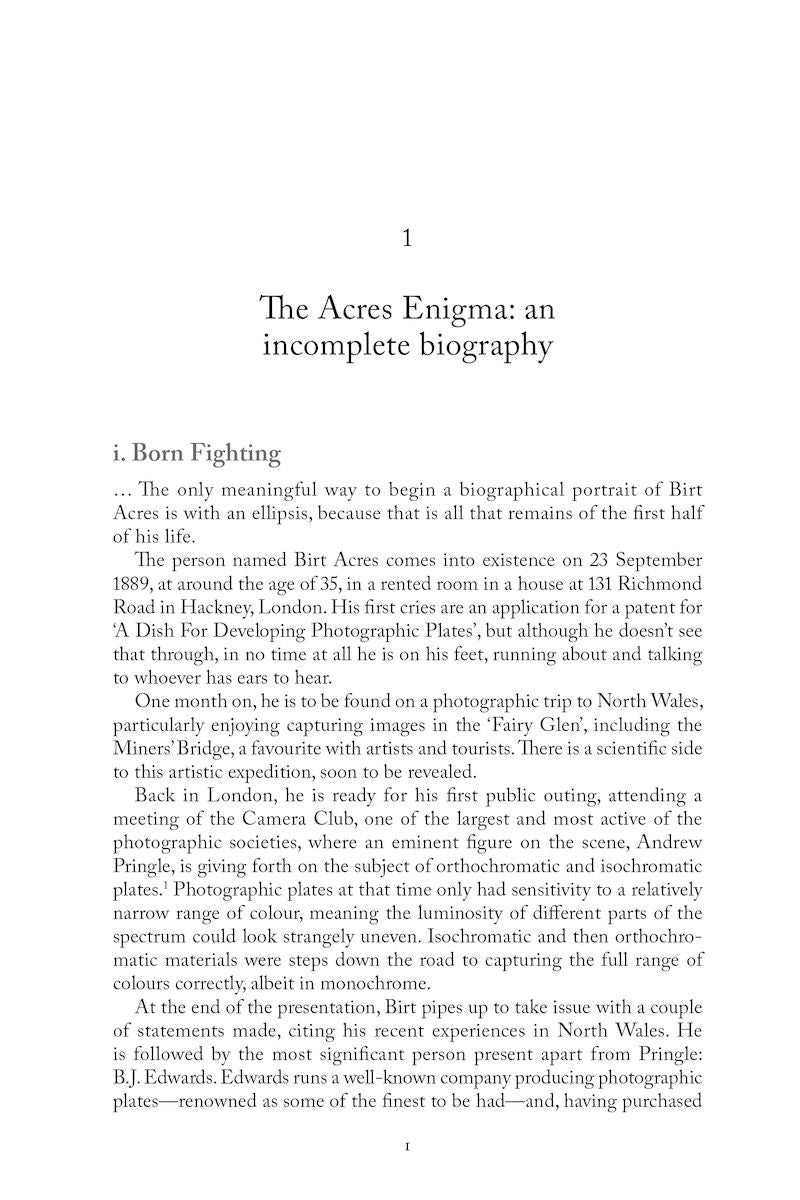
1. The Acres Enigma: An Incomplete Biography
2. Acres of Barnet
3. Finding Precedents: Acres’s Sources of Inspiration
4. Tradition and Transformation: What Acres Filmed
5. The Missing Link: Acres and R.W. Munro
6. Making an Exhibition of Himself: How Acres’s Films Were Shown
7. The Travels and Travails of Harry Short
8. A Nursery of Cinema: Acres’s Assistants and their Careers
9. How Birt Acres Got Lost
Notes
Filmography
Bibliography
Index
- 336 Pages
- 116 Black & white illustrations