









University of Exeter Press
The Holocaust and Hollywood Studios
At Home and Abroad
Couldn't load pickup availability


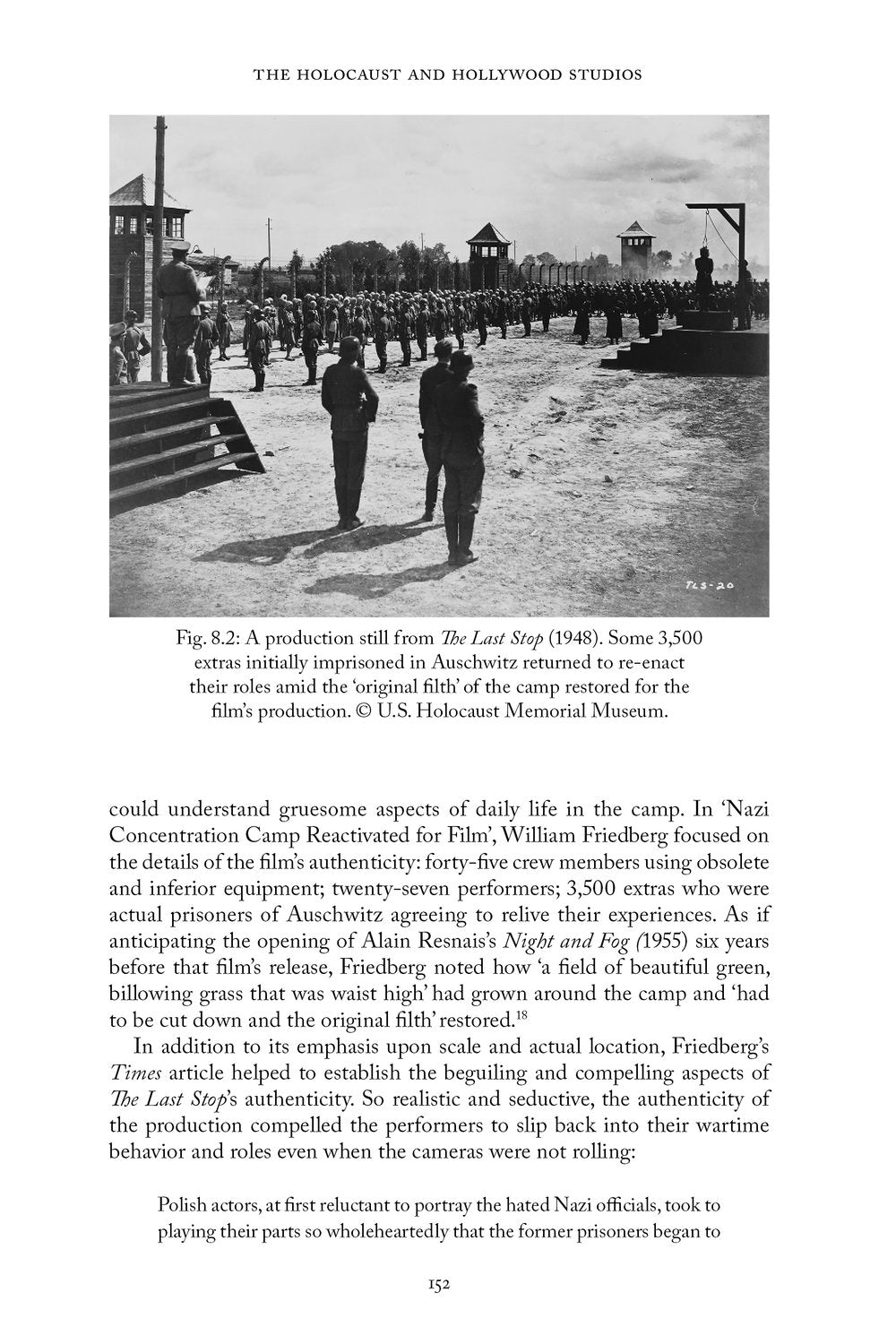
What did Hollywood know and do about growing Nazi anti-Semitism and the Holocaust as America and the rest of the world waited to respond?
This book traces the complex relationship entangling American movie studios with Nazi anti-Semitism and the Holocaust throughout the 1930s and 1940s. Many film and general histories of the period have concluded that Hollywood could or should have done more to call attention to the growing threat. Yet the very same market forces of the 1920s that brought about rapid expansion of the film industry overseas later embroiled Hollywood in a complex anti-Semitic disinformation campaign at home and abroad that targeted the industry and even threatened its very existence.
Faced with attacks and accusations of warmongering at home, Hollywood’s responses occurred within the ever-evolving and precarious context of the time. This important volume situates and explains Hollywood’s encounter with Nazi anti-Semitism and the Holocaust, not just through isolated films or a few individuals, but in terms of how the path to genocide touched almost every aspect of film business operations along the way. A wealth of new archival research and scholarship across multiple perspectives are examined to bring a fresh and nuanced understanding.
The book will be of interest to academics and students in Film Studies, Jewish Studies, Holocaust Studies, Mass Media, American History, and American Studies. It also has much appeal for the general reader interested in Hollywood history, World War II, the Holocaust, the history of American Jewry, and the Roosevelt presidency.
Steve Carr’s The Holocaust and Hollywood Studios is an engaging and nuanced history. It tackles the political and social pressures under which movies were made and distributed, here and abroad. Antisemitism, and fears of charges of antisemitism, play a prominent role, as do considerations of what we want films to do: entertain or change minds? It’s impossible to read this fantastic book without thinking of contemporary battles over the role of media, and how companies navigate ethical versus short-term financial considerations. Highly recommended.
Kenneth S. Stern, Director, Bard Center for the Study of Hate
In this penetratingly original study, Steven Carr takes us inside the Hollywood film industry of the 1930s and 40s to see the numerous countervailing pressures it had to navigate in responding to Nazi racism. He thus adds complexity to earlier accounts so effectively that no reader ever again will be able to think about this subject in familiar and hackneyed ways.
Peter Hayes, Professor Emeritus; Professor of History and German, Theodore Zev Weiss Holocaust Educational Foundation Professor of Holocaust Studies, Northwestern University
In his provocative and illuminating new study, the cultural historian Steven Carr explores Hollywood’s most harrowing motion picture legacy – the films that shape our cinematic memory of the Holocaust. From the first intimations of genocidal intent in the 1930s to the immediate postwar reckonings with the unimaginable, from the haunting masterpieces to the off-the-radar curiosities, Carr provides a sensitive and penetrating inquiry into what is—no way around it--a global motion picture genre.
Professor Thomas Doherty, Brandeis University
Steven Carr’s The Holocaust and Hollywood Studios is mandatory reading for anyone wishing to wade into the often emotional debates over the role of the movie industry during the Holocaust. Carr’s expertise is on full display here, bringing logistical and historical context to studio decisions and encouraging a much more nuanced interpretation of this complicated topic. A welcome and vital new addition to the scholarship.
Dr. Rebecca Erbelding, historian and curator, United States Holocaust Memorial Museum