










University of Exeter Press
Fossil-Fueled Fictions
Coal, Oil, and the (Un)Making of American Literary Modernity
Couldn't load pickup availability
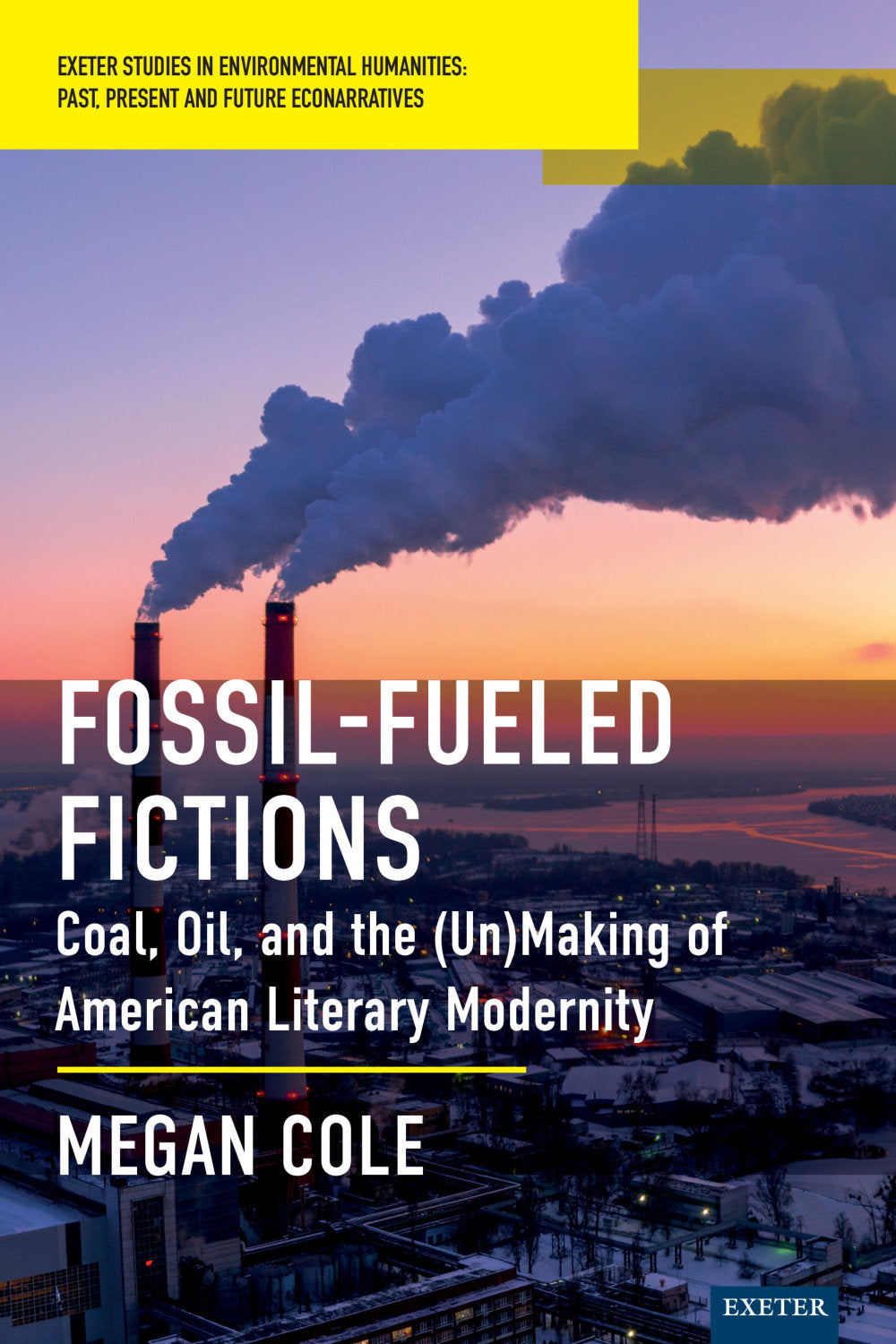
Though fossil fuels built modern society, literary critics have long assumed that most American novelists of the early twentieth century were unaware of the dire environmental, economic, and social consequences of non-renewable energy. The conventional story suggests that modernist authors were entirely dazzled by the speed, acceleration, and teleological progress afforded by fossil fuels, paying little attention to the ecological fallout.
Fossil-Fueled Fictions: Coal, Oil, and the (Un)Making of American Literary Modernity challenges this assumption. It asks what kinds of early-twentieth-century narratives recognized that modern subjectivity is not unencumbered and progress-bound, but heavily dependent upon finite stores of fossil energy? What would it look like—environmentally, economically, and socially—if modern ‘petrofantasies’ of unfettered upward mobility and unchecked acceleration were tempered by the ‘petrorealities’ of energy slowdowns, chokepoints, and general instability?
Through an expansive survey of modernist U.S. fiction, this book argues that early twentieth-century novels were mired in such ‘petrorealities’, deeply attentive to fossil fuels’ relationship to social and environmental degradation. Long before ‘climate change’ became a common term, chroniclers of modernity were already registering the catastrophic implications of fossil fuel consumption. In doing so, they complicated the narratives and ideologies of American modernism, including concepts of eternal progress, spatial and temporal domination, upward mobility, autonomy, individualism, and privatization. By pairing close readings with archival evidence, Fossil-Fueled Fictions demonstrates reading these novels materially and ‘extractively’ can draw the overwhelming presence of non-renewable energies to the narrative surface.
Chapter 1: ‘Did We Run Outa Gas?’: Crashes and Crack-Ups in the Roaring Twenties
Chapter 2: ‘Some Day This Oil Will Go’: Indigenous Modernisms and Settler Temporalities in the Petroleum Age
Chapter 3: ‘A Man or a Natural Resource?’: Black Modernisms and Dialectical Crisis
Chapter 4: ‘A Senseless Nightmare Road’: Arrested Development in the Great American Road Bildungsroman
Chapter 5: ‘The Whole Country’s Going to Stink of Oil’: Agency, Culpability, and Oil Villainy


