









University of Exeter Press
Onward with Stanley Cavell
New Essays on the Philosopher’s Legacy
Couldn't load pickup availability
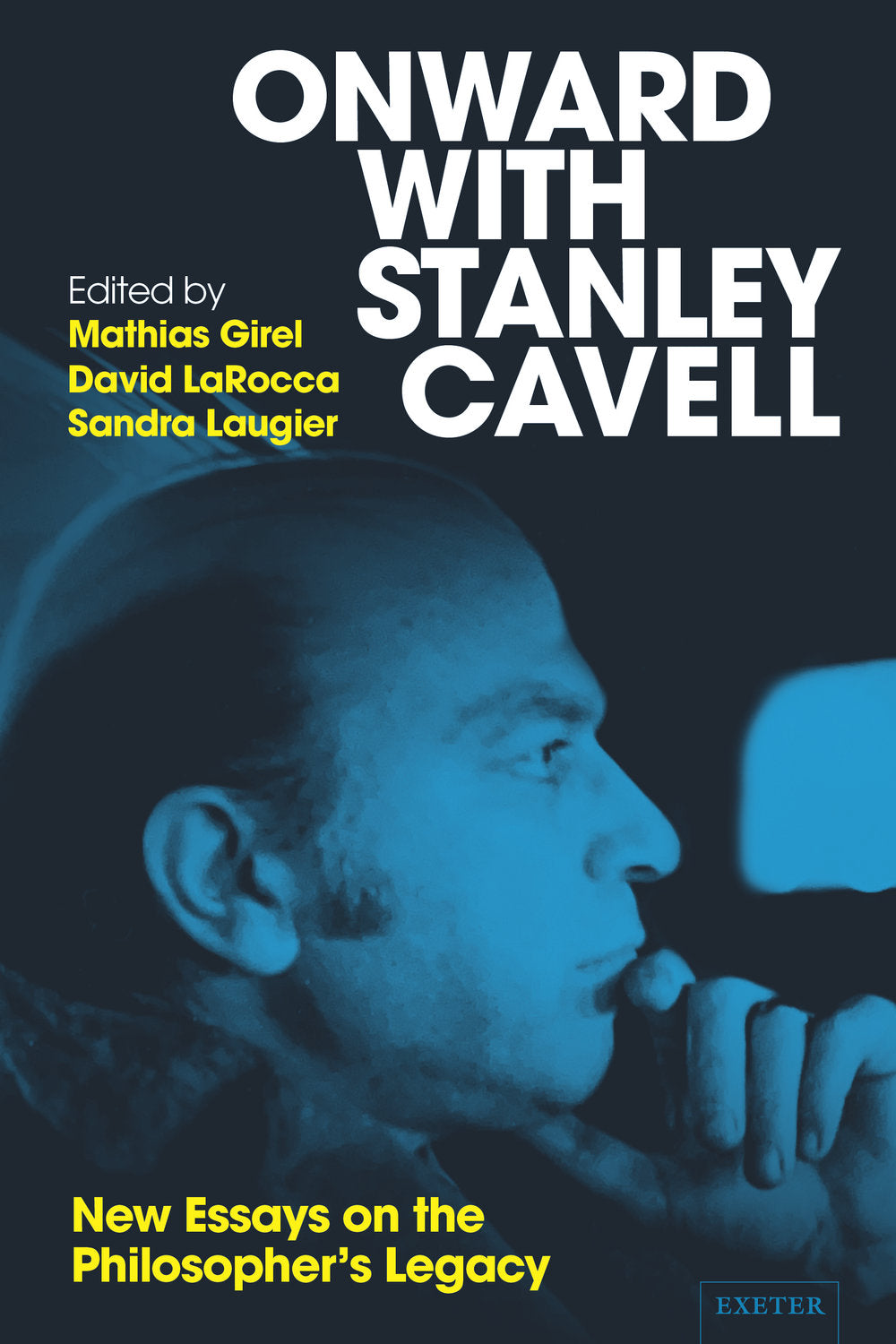
Stanley Cavell (1926–2018) was one of the most significant and field-shaping figures in contemporary philosophy. Onward with Stanley Cavell offers the first major investigation of his legacy and nachlass, providing fourteen insightful essays that engage with the posthumous volume, Here and There: Sites of Philosophy (2022), its connections to the rest of his work, and its broader implications for the future of thought.
Gathering an international group of interdisciplinary scholars, this collection explores the vitality of Cavell’s afterlife and the continued urgency of his writing. The chapters are organized into four thematic areas—Futures of Philosophy, The Ordinary Life of Language, A Mood for Psychoanalysis, and Thinking American Thought—reflecting the capacious and enduring nature of Cavell’s work. From his deep engagements with Wittgenstein, Austin, and Emerson to his forays into the philosophy of music, the volume tracks how Cavell’s voice continues to resonate across the arts, humanities, and social sciences.
At once an up-close encounter with the best of Cavellian criticism and an invitation for readers to chart their own new directions in scholarship, it will appeal to specialists and students in media studies, cultural studies, philosophy, and related fields, as well as the general reader interested in the impact of one of the most important modern philosophers.
Introduction: Further Considerations of Stanley Cavell’s Posthumous Reception Mathias Girel, David LaRocca and Sandra Laugier
I. Futures of Philosophy
Like a Hand: Receptive Thinking and the Heart of Futurity in Stanley Cavell Thomas Carlson
Skepticism for the Future: Reinterpreting Skepticism in the Light of the “Exhaustion of Possibilities” Élise Domenach
The Outsider Within: Cavell, Derrida, and Deconstruction Stephen Mulhall
Meaning It: Music, Cavell, and the Sense of Occasion Paul Standish
II. The Ordinary Life of Language
Tracing Lines of Thought in “The World as Things: Collecting Thoughts on Collecting” Veena Das
Language and the Body Martine de Gaudemar
The Idea of a Here and a There as Sites of Philosophy Jean-Philippe Narboux
III. A Mood for Psychoanalysis
Becoming Passive: Notes Mostly about “Notes Mostly about Empathy” Jeroen Gerrits
Cavell’s Ellipsis Claire Brunet
Expressions of Interest in Phillips and Cavell Emma Williams
IV. Thinking American Thought
“Undiscussable Differences”?: Stanley Cavell on Allan Bloom and Disappointment David LaRocca
Reflections on Wallace Stevens at Mount Holyoke Hugo Clémot
America as Experience: Pragmatism and Perfectionism Mathias Girel and Sandra Laugier
What is American Philosophy? Russell Goodman
- 248 Pages